


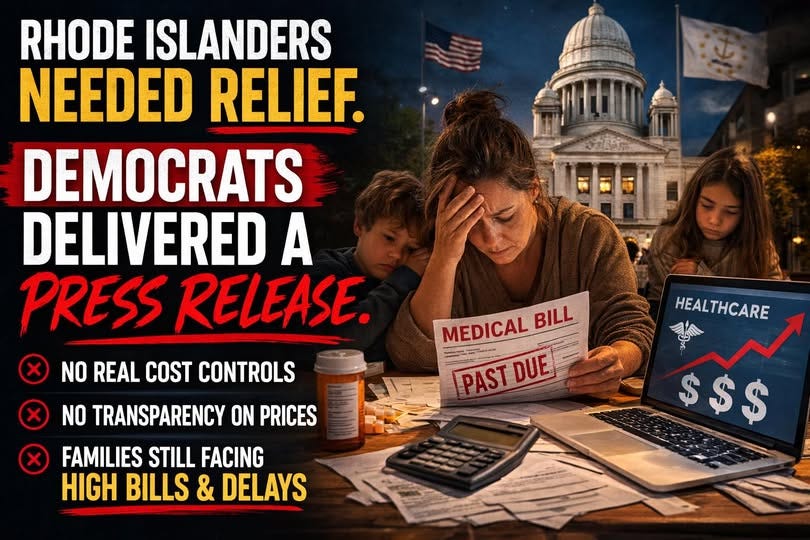
Rhode Islanders do not need another round of polished State House talking points dressed up as major health care reform. Rhode Island Senate Democratic leaders, led by President Valarie Lawson and Health & Human Services Chair Melissa Murray, rolled out a 17-bill “health care reform” package they say will improve access, affordability, and the medical workforce. What the Senate rolled out may help keep parts of the system from getting worse, and that matters, especially in crisis care and behavioral health. But let’s be honest about what this is and what it is not. This is a maintenance plan. It props up a system that is already failing too many families, seniors, and small businesses, without doing enough to challenge the people and institutions driving the cost crisis in the first place.
If lawmakers really wanted this to be about patients instead of headlines, they should have gone further. They should have required real price transparency from hospitals and insurers before treatment whenever possible, not after the bill shows up. They should have capped abusive facility fees that turn a routine visit into a financial hit. They should have put guardrails on premium hikes and deductible growth, with automatic review when increases outpace wages or inflation. And they should have done more to protect families from medical debt wrecking their credit over one emergency or one bad month.
They also should have focused more on access where Rhode Islanders actually live. That means stronger support for community health centers, urgent care expansion, telehealth access, and real incentives to bring providers into shortage areas, not just broad workforce promises years down the road. And if we are serious about behavioral health, patients and families need enforceable wait-time standards, not vague commitments that sound good at a press conference.
What makes this frustrating is that Rhode Islanders are not asking for miracles. They are asking for basic fairness. They want to know what care will cost before they get it. They want to know that one emergency room visit will not wreck their credit. They want faster behavioral-health access, more local options for care, and a system that does not leave them fighting insurers while they are already sick or overwhelmed. That is the standard lawmakers should be aiming for.
There is some good in this package, and I will give credit where it is due. But it also feels like lawmakers did just enough to ease some pressure now, while hoping Washington eventually comes through on the bigger cost and access problems they were not willing to fully take on here at home. If you are a Rhode Island family trying to afford coverage, fighting a denial, or staring at a bill you cannot pay, this still does not change enough. That is the real problem. Keeping the system from collapsing is the bare minimum. Rhode Islanders deserve a health care agenda that puts more power back in patients’ hands and makes care more affordable, more transparent, and easier to access.